Why is improvisation important for advanced dancers?
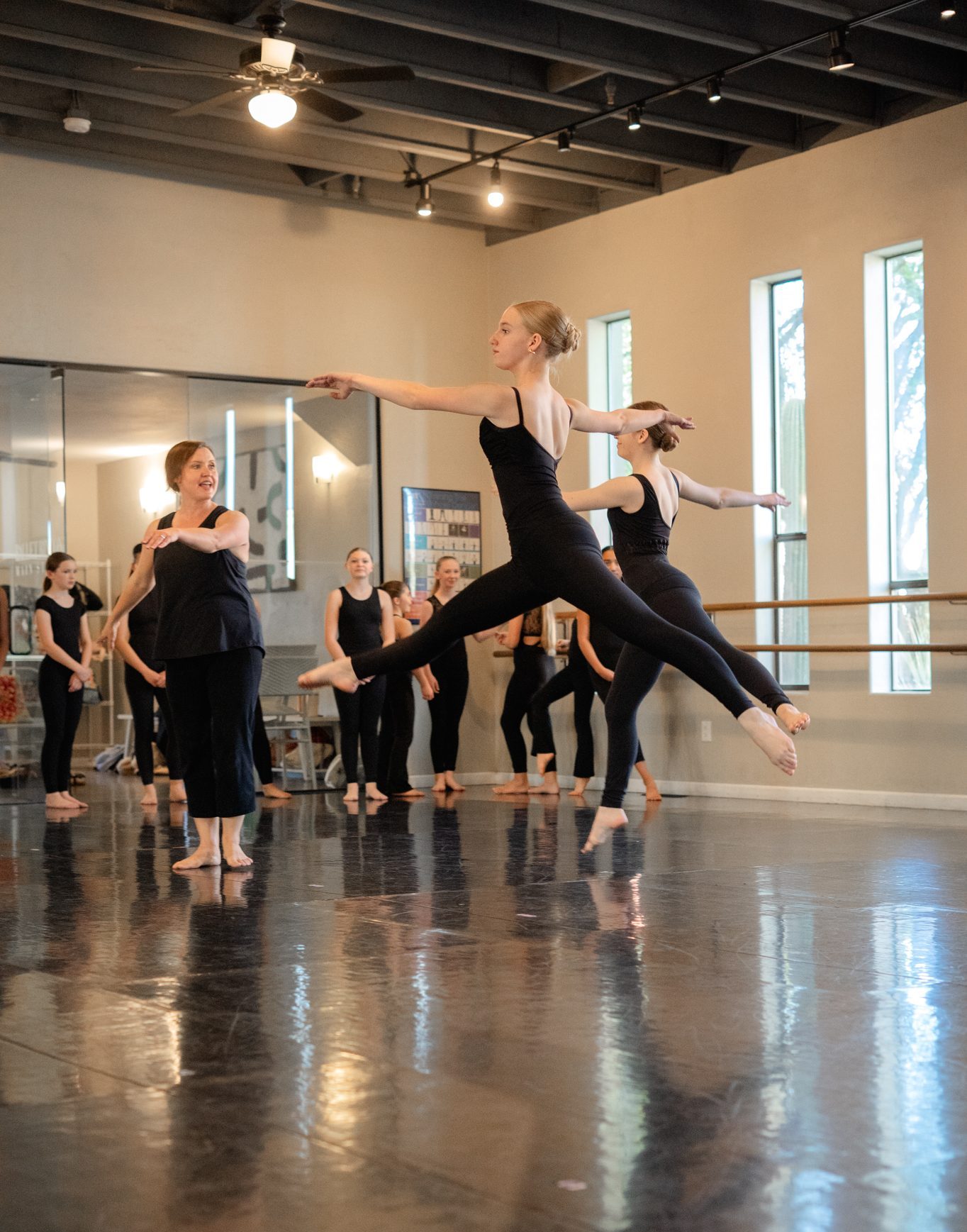
Improvisation has exploded in popularity throughout the dance industry in recent years. Dancers – especially advanced students who want to have a professional career – must be comfortable with dance improvisation in order to success. Dancers may be asked to improvise at auditions, during convention classes and workshops, in rehearsal with guest choreographers, or even on stage as part of choreography. It is our job as dance teachers to help our students build their dance improvisations skills, as they will use them throughout their careers.
What are some challenges that advanced improvisers face?
Because improvisation has become so widespread in the dance industry, many advanced dancers are comfortable with improvisation. If you have experienced dancers who don’t have much experience with improvisation, you may want to try the tips and activities in this blog post. But no matter how long they have been practicing, advanced improvisers may face challenges such as:
- Getting stuck in their own movement habits – repeating the same movements over and over again
- Feeling as though they need to copy the teacher’s style instead of doing what’s authentic for them
- Mimicking “cool” tricks or movement styles they have seen on TV or social media
- Feeling vulnerable when doing their own movement, especially if it has an emotional connection for them
- Being uncomfortable when watched by a teacher or other students while improvising
- Comparing themselves to other dancers, whether they are their peers or figures in the industry that they admire
- Feeling bored or uninspired because they are no longer challenged by dance improvisation
As dance educators, it is our job to help our advanced students overcome these challenges, so they can fully embrace their own authentic style in dance improvisation. We can do this by purposefully planning dance improvisation experiences with clear learning objectives, and exposing them to a range of dance improvisation tactics and techniques that can help them find their own improvisational style.
What are some tips for teaching dance improvisation to advanced students?
Here are my best tips for teaching dance improvisation to advanced students:
- Be specific. Advanced dance students often need to discover unique ways of moving and break out of their typical dance habits. Giving them clear and specific dance improvisation prompts can help them take risks in their improvisation and discover new movement choices.
- Be challenging. Devise dance improvisation prompts that get students out of their comfort zone. For example, you can mix up the body parts that students focus on: “Lead with your trochanters.” You can challenge their movement quality: “Use momentum to travel across the floor.” Or you can combine concepts like level and musicality: “Change levels every 4 counts.” If students are mature enough, consider drawing inspiration from contact improvisation, to help build collaboration skills.
- Have a learning objective or goal in mind. When you are designing or planning dance improvisation activities for your classes, consider what you want your students to learn or accomplish. How can this exercise deepen their understanding of dance improvisation? How can it help them develop new dance improvisation skills? What can they learn about dance technique, artistry, and social-emotional skills through their improvisational experience?
- Provide directions, but leave some room for interpretation. Advanced dance improvisation students can benefit from clear, concise directions that help focus their movement choices. However, it can also be helpful to provide some room for interpretation. Allow the students to put their own unique twists on the prompt so that they can further develop their artistry.
- Allow students to take the lead. You can help your advanced dance students build creative skills by letting them make up their own dance improvisation exercises. Bonus: As they explain their prompts to the students, they will learn communication and leadership skills as well!
- Encourage students to be creative, and even a little silly! Advanced dancers can take their training – and themselves – tooo seriously. Incorporating play into your dance improvisation lesson plans can be a great way to help your students relax and ease some of the stress associated with their training. Moreover, students of all ages – even older and more advanced dancers – learn through play. You’ll find strategies for creating a playful dance experiences in this blog post: The Holistic Approach to Using Play in the Dance Studio
What are some good dance improvisation exercises to use in class with advanced students?
When designing dance improvisation prompts and activities to use with advanced dancers, it is important to focus the unique challenges that they face. Consider a unique learning objective, combining multiple movement tasks into a single dance improvisation exercise, and leaving some room for interpretation in with your directions. Below is one of my favorite dance improvisation exercise to use in classes with advanced improvisers. You can find 24 more in The Holistic Collection of Dance Improvisation Prompts & Activities.
Rules
The primary objective of this activity is to help dancers unlock new improvisational potential by challenging their normal movement patterns.
How to Use this Activity
- Challenge your dancers’ movement patterns by imposing a set of limitations or “rules” on their improvisational choices, so that they cannot fall back into their typical movement habits.
- Dancers must follow the rule as they improvise, using the rule to guide their movement choices.
Examples
- Keep 3 appendages attached to the floor at all times
- Only one foot can be on the floor at any time
- Change level every 4 counts
- Knees must remain bent throughout the entire improv
- No locomotor movement; must stay in one place
- No more than 2 body parts can move at any time
- Do not use your arms
- Keep 2 body parts attached to one another at all times
- Keep both feet on the floor at all times
Let’s connect!
- What are some of your favorite strategies for teaching improvisation to advanced dancers I’d love to learn from you … share your thoughts and ideas in the comments!
- Visit my Resource Shop for tools that support a holistic teaching and creative practice.
- Keep in touch by signing up for my newsletter, or join me on Facebook at The Holistic Dance Teacher.
- If you enjoyed this blog post, you can support my work by Buying Me A Coffee.