

Why is team-building important in dance?
One of the most incredible things about dance, in my opinion, is its capacity to bring people together in real and powerful ways. In our age of social media, Zoom meetings, and FaceTime, dance provides a unique opportunity to connect in real time and real space, face-to-face and heart-to-heart. We have an opportunity, as dance teachers, to help our students make meaningful connections that will support their overall well-being and lead to lifelong friendships. Because of this, celebrating community is one of the Core Tenants of The Holistic Dance Teacher Approach.
One way that we Celebrate Community in The Holistic Dance Teacher Approach is by focusing on both team-building and team bonding in our dance classes. While these are two different kinds of activities, they go hand in hand. Team-building can lead to team bonding, and dancers develop team-building skills through team bonding. Both are necessary for successful and happy dance companies and teams! You can learn more about team-building and team bonding in dance in this blog post:
How can we practice team-building in dance?
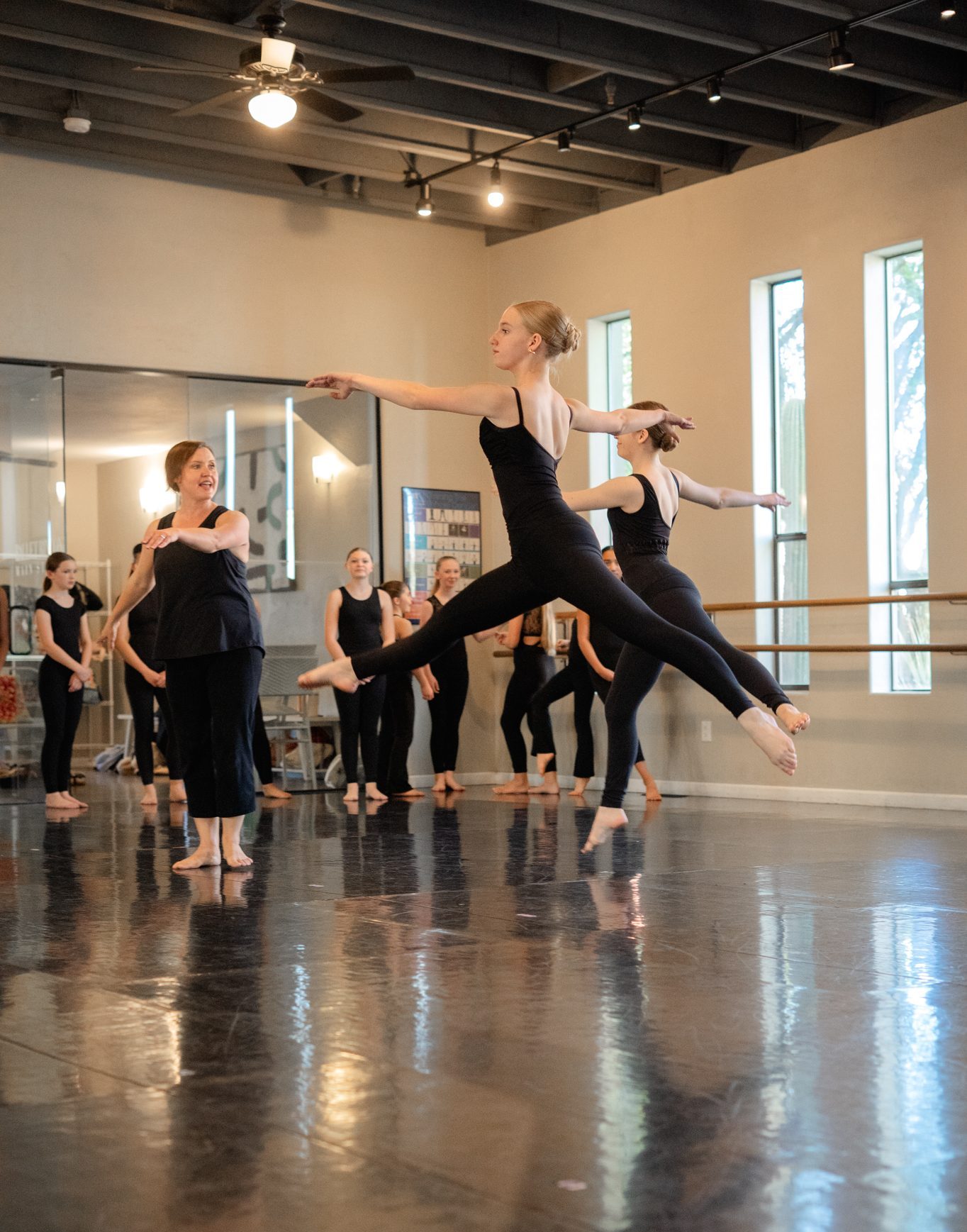
One of my favorite ways to celebrate community in my classes and rehearsals is to play team-building dance games. Team-building dance games help dancers develop collaboration, communication, and creative skills as they work together to meet a shared challenge. Not only are these skills important in the dance studio, but they also serve dancers well in their lives outside the studio. Making time for team-building dance games is an important way that we can set our students up for success in their art and in their lives. In this blog post, you’ll find 3 of my favorite team-building dance games that will help you create a strong and supportive community in your dance classes, as well as other resources that will make your back-to-dance season a success!
If you like the team-building dance games in this blog post, check out The Holistic Dance Teacher Team-Building and Team Bonding Dance Games and Activities – 10 unique, educational dance games and activities for team-building and team bonding that you can easily use in your dance classes, rehearsals, and team events.
A note on play as an educational tool in the dance studio
These team-building games for dance class are based in the philosophy that play can be an important educational tool in the dance studio. Research indicates that students of all ages learn through play, and play can help children can develop important physical, social, cognitive, and emotional skills. Using play as an educational tool in the dance studio can help dancers gain self-confidence, engage in new experiences, learn new dance skills and concepts, refine their dance technique, cope with stress and anxiety, and meet new physical and mental challenges. Incorporating play in the dance studio with students of all ages can have many benefits, from helping students learn new skills and refine their technique to helping them Read more about play in the dance studio in this blog post: The Holistic Approach to Using Play in the Dance Studio.
Two team-building dance games
Describe a Dance
The primary objective of this team-building dance game is to help dancers develop communication, imagination, analysis, and cooperation skills.
How to play
1.) Arrange the dancers in small groups. Choose one student to be the leader in each group.
2.) Assign each leader a dance step that they and the other dancers in the class will be familiar with. Whisper the name to them or pass it to them on a sheet of paper so that the other dancers in the group do not hear the name of the step.
3.) The leader will describe the dance step to the other dancers in their group in roughly 8 words or less.
- They cannot demonstrate the step or any part of it
- They cannot name the step
- They must only use words to describe what the step is – no actions or gestures
4.) After the leader describes the assigned step, the other dancers in the group will work together to figure out the name of the step and demonstrate how to do it.
5.) Repeat the process with a new leader until all of the dancers in the group have had a chance to lead.
6.) Each team will get 1 point for each step they can name, and 1 point for each step they can demonstrate correctly. The team with the most points wins.
Puzzle Dances
The primary objective of this activity is to help dancers work together to meet a common goal, while developing collaboration and communication skills.
Materials Needed
- One piece of paper per group
- Pens or pencils
- Index cards
How to Play
1.) Divide the class into 2 teams, Team A and Team B.
2.) Each team will make up a movement phrase or combo that is 4-8 counts of 8 long. The teams should not watch each other as they make up the dances.
3.) When they are finished creating the dance, the teams will write down instructions for performing their dances on the piece of paper.
- The instructions should include the body parts that are moving, the name of the steps, the facing or pathway, or any other information that will help the other team perform their choreography
4.) The teams will copy the directions onto index cards, with instructions for 1-2 steps listed on each card.
5.) Team A will lay their cards face down around the studio floor.
6.) Team B will have about 10 minutes to gather the cards, read the directions, and try to recreate the choreography as closely as they can by:
- Determine how to do the steps written on the cards, including the arms, pathway, and facing
- Putting those the steps in the correct order
7.) Team B will share the dance that they recreated using the directions on the cards. Team A will judge Team B’s recreation of the dance, giving them 1 point for each step they got correct and in the right order.
8.) Repeat with the other team playing.
9.) The team with the most points wins.
Let’s connect!
- What are some of the ways that you tuse eam-building in the dance studio? I’d love to learn from you … share your thoughts and ideas in the comments!
- Visit my Resource Shop for tools that support a holistic – and playful! – teaching and creative practice.
- Keep in touch by signing up for my newsletter, or join me on Facebook at The Holistic Dance Teacher.
- If you enjoyed this blog post, you can support my work by Buying Me A Coffee.
I am doing some research for my teambuilding event in June. There will be 5 ladies and 1 man this will be the first time we meet face to face with each other. The age range is from 40-to 60 I want to try and keep it low impact if you could give me a description, duration, location, and cost. Please let us know if you give any government rates.
Hi Stacy, thank you for your interest! Are you interested in an on-site team-building session at your location, something over Zoom, or a written description/plan made for your group that someone on-site can use to facilitate a session? I will be on maternity leave in June and unable to facilitate something at your location, but I could prepare a written plan for your group if you are interested in that. Please email shannondoolingdances@gmail.com for more information.